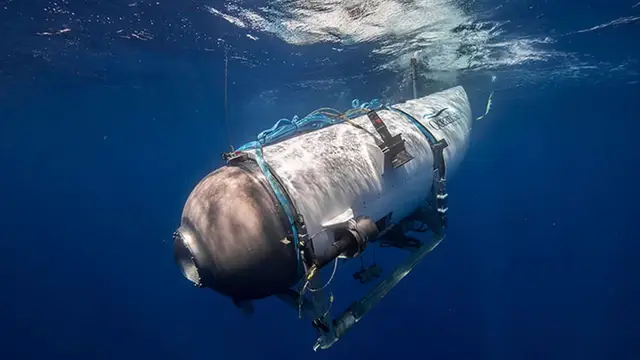
It accused OceanGate of operating a culture of ‘close-mindedness’
The Transportation Safety Board of Canada has released its damning marine transportation safety investigation report into OceanGate’s Titan sub, accusing its makers of ‘confirmation bias’ and outlining several failures in its design.
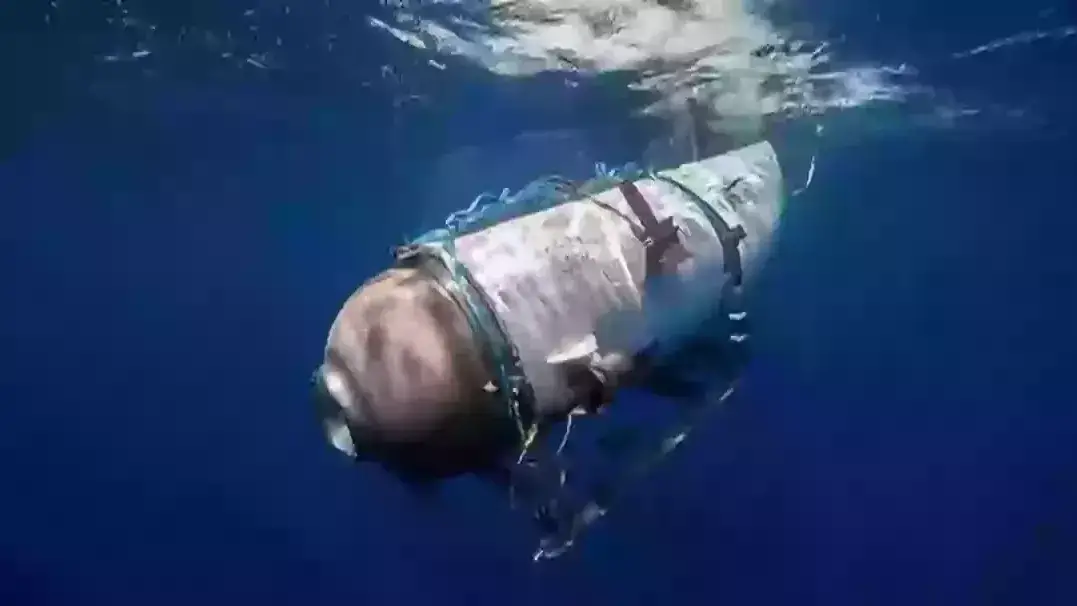
On June 18, 2023, a submersible named Titan went on a commercial expedition to see the wreck of the Titanic lying at the bottom of the North Atlantic Ocean, located 372 nautical miles south-southeast of Cape Race, Newfoundland and Labrador. Tragically, approximately one hour and 45 minutes into its descent, the sub – operated by American tourism and expeditions company OceanGate – imploded.
The five people on board – pilot, Hamish Harding, 58, businessman Shahzada Dawood, 48, and his son Suleman, 19, leading expert on the Titanic wreck site Paul-Henri Nargeolet and Stockton Rush, the founder of OceanGate – were all killed.
While the US Coast Guard released its final report on the Titan sub disaster back in 2025, the Transportation Safety Board of Canada (TSB) has since released its investigation report M23A0169 – citing both the company’s culture and numerous design flaws as major factors in the horrific accident.

Victims businessman Shahzada Dawood, 48, his son, Sulaiman Dawood, 19, OceanGate CEO Stockton Rush, 61, British billionaire Hamish Harding, 58, and French Titanic expert Paul-Henri Nargeolet, 77 (Handout/OceanGate/Victoria Sirakova/Getty Images/JOEL SAGET/AFP via Getty Images)
Titan’s pressure hull and carbon fibre cylinder
The report analyses the Titan sub’s pressure hull and carbon fibre cylinder, explaining that it’s typical to see steel or titanium used as the cylindrical cap at either end of the titanium domes in a sub’s pressure hull. However, the Titan used a carbon fibre cylinder – a move the report branded as ‘novel’.
It adds that the pressure hull is ‘typically spherical’, given this is ‘the best shape for resisting external pressures and allowing even distribution of stresses,’ but in the case of the Titan, it was cylindrical.
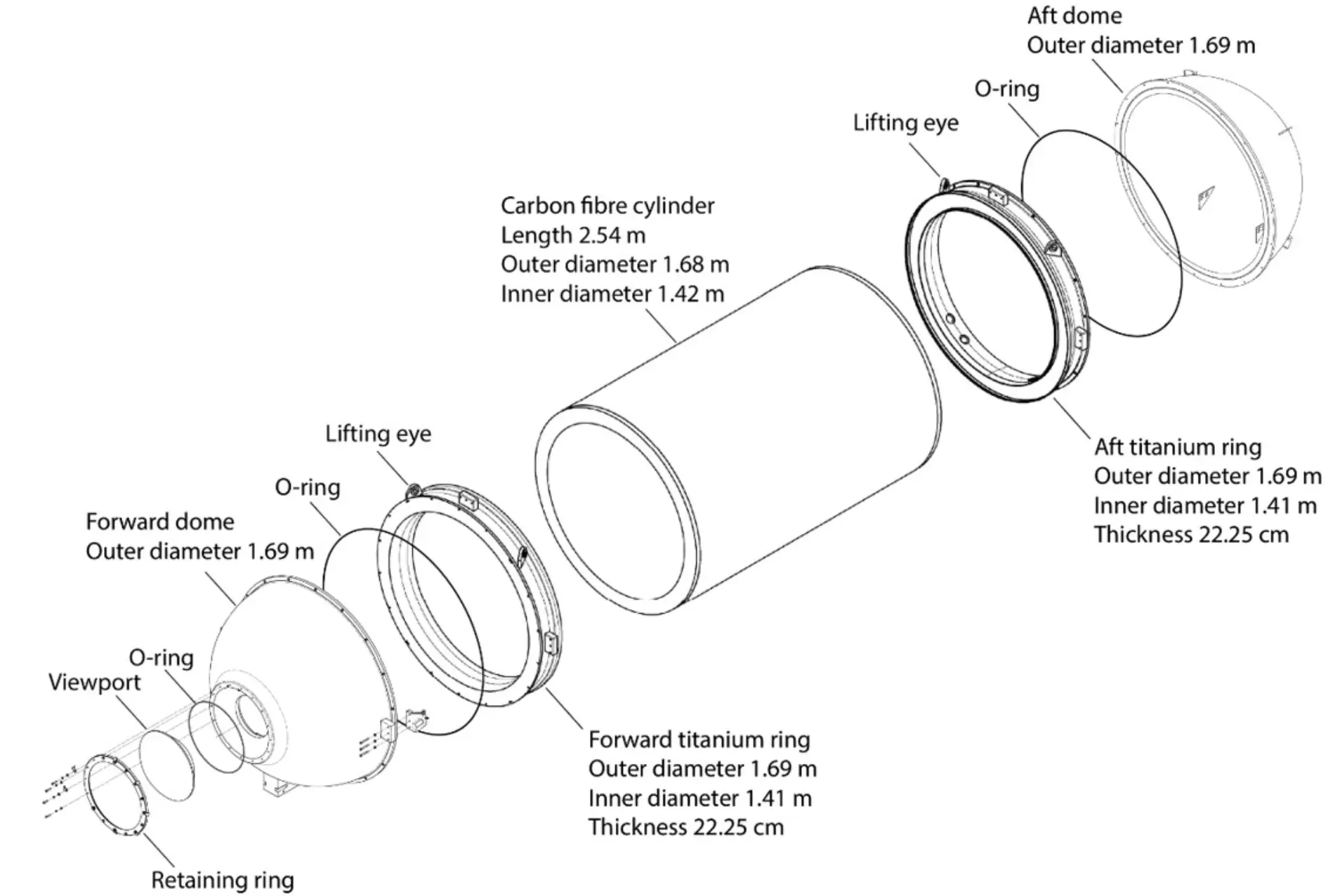
The Titan pressure hull (TSB, based on OceanGate drawings)
Differences between the original design and actual sub
The investigation ‘determined that the as-built properties of the Titan’s carbon fibre cylinder were never validated to ensure they met the theoretical values used in the design process’.
It added that ‘standard engineering practices’ were not followed during the construction or testing of the sub.
This means it was ambiguous how long Titan’s pressure hull would ‘remain structurally intact’ if being used for repeated dives to see the Titanic wreckage.
Testing of the sub
OceanGate built two 1/3 scale models of the Titan to test how it responded to pressure and tested them six times. Both models failed. And, shockingly, they failed at depths which were higher than the final resting place of the Titanic wreckage.
The company changed the design and manufacturing, but the investigation found that the testing of the final sub design was limited.
Every time the final Titan craft was tested – a total of 13 times – it developed ‘stressed, small damages’.
Inspectors added: “Normal engineering practice would be to expose full-scale models to a very significant number (hundreds, possibly thousands) of test cycles.”
The sub was operated by OceanGate (David Ryder/Bloomberg via Getty Images)
Effectiveness of two safety systems
The report claims OceanGate ‘developed two systems to monitor the integrity of the pressure hull’.
The first was a ‘strain monitoring system’ which ‘provided data for post-dive analysis to identify potential problems with the pressure hull that could lead to failure on a subsequent dive’.
And the second, ‘an acoustic monitoring system,’ which was meant to send an alert if it could sense an ‘impending hull failure’ in enough time for the sub to rise to the surface.
However, the investigation analysed the strain data by OceanGate and found it was ‘inconsistent’ and ‘did not result in the pressure hull being removed from service before its failure’.
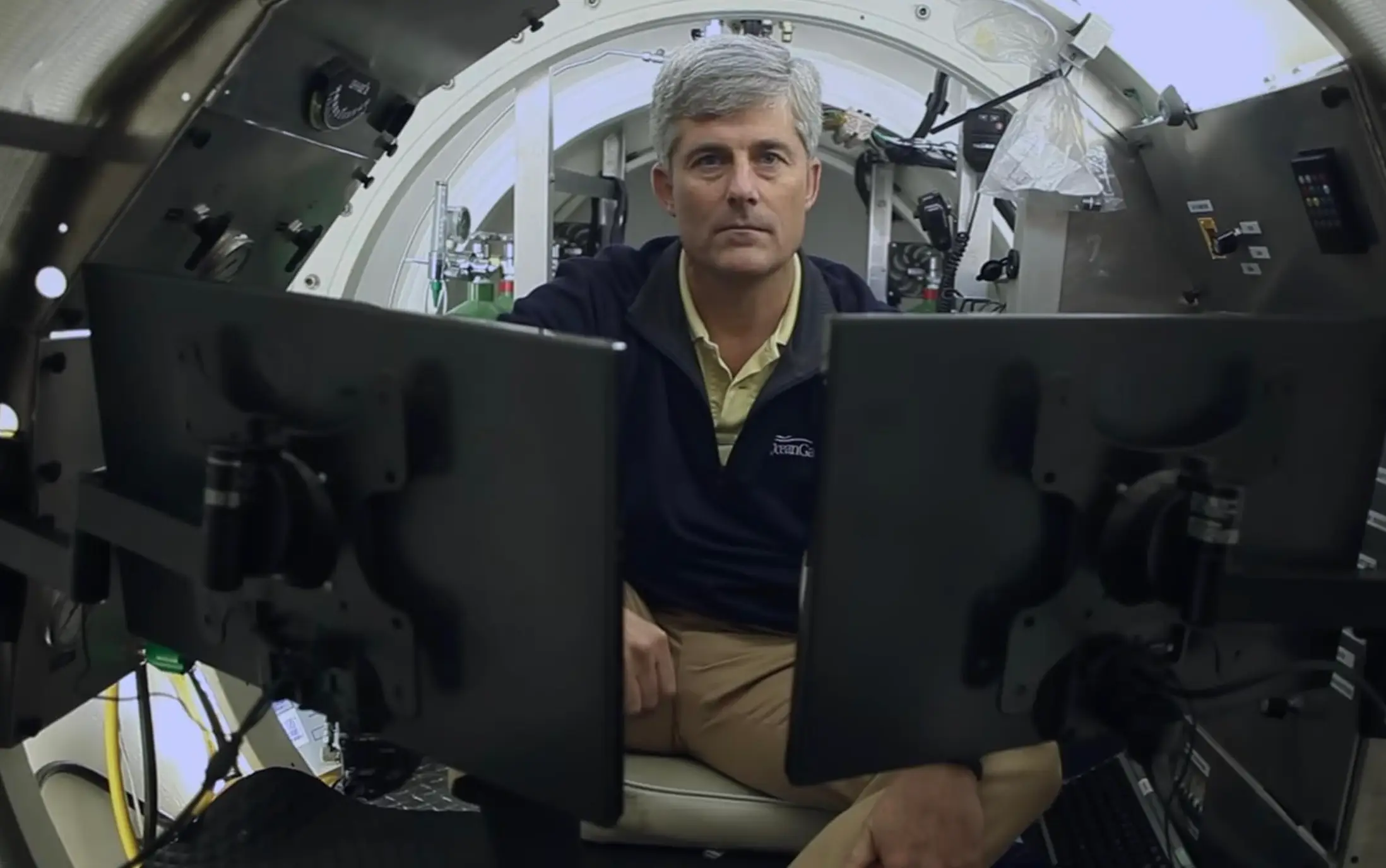
OceanGate CEO, Stockton Rush (Netflix)
The report found the acoustic emission monitoring system was similarly flawed, not proven to ‘consistently provide enough advance warning’ and ‘did not function as intended during the occurrence’.
The cylinder failed ‘progressively’ as a result of the ‘reduced compressive strength of the Titan’s carbon fibre cylinder’ with damage ‘accumulating during each dive cycle,’ alongside ‘defects that were potentially introduced during manufacturing, operations, storage, and transport’ of the sub.
Company ‘close mindedness’
But it wasn’t just the physical structure of the sub which raised concerns among investigators. They also found OceanGate had a culture of ‘closed-mindedness, pressures toward uniformity and overestimation of the group’s power’, which could have worsened the risk of the dive.
It also added that ‘confirmation bias’ affected decision-making and risk management at the company.
“Over the course of OceanGate’s operating history… employees with expertise in specific areas left the company or were dismissed after raising safety-related concerns or expressing differing perspectives from the CEO.”
Overall, the report concludes that OceanGate ‘did not identify and mitigate key risks associated with the structural integrity of the Titan’.
LADbible Group has contacted the Transportation Safety Board of Canada for additional comment.
Final report into Titan sub disaster released by US Coast Guard

 Follow us on Google Discover
The US Coast Guard has released its final report on the Titan sub disaster.
In June 2023, OceanGate’s Titan submersible carrying five people imploded on its way down to view the wreckage of the Titanic in the North Atlantic Ocean.
The 335-page report was released today (August 5), over two years on from the tragic event.
Five people died in the tragic ordeal, including OceanGate CEO Stockton Rush.
Hamish Harding, Shahzada Dawood, Suleman Dawood, and Paul-Henri Nargeolet also died.
Suleman was the youngest on board and only 19 years old.
The newly-released report determined that the incident was caused by the loss of structural integrity of its carbon fibre hull.