When I chose love over legacy, my mother turned her back on me without hesitation. Three years later, she returned — judgment in her eyes, no apology on her lips. But what she found behind my front door was nothing like she expected.
My mother didn’t cry when my father left. She didn’t cry when he slammed the door, or when she pulled the wedding photo from its frame and dropped it into the fireplace. Instead, she turned to me.
I was five years old, already learning the art of silence. She smiled coldly. “Now it’s just us, Jonathan. And we don’t fall apart, son.”
That was the standard she set. Her love was never warm, never soft. It was efficient, strategic. She enrolled me in the best schools, signed me up for piano lessons, and taught me posture, eye contact, and the importance of thank-you notes. She didn’t raise me to be happy. She raised me to be bulletproof.
By the time I turned 27, I had stopped trying to impress her. There was no way to succeed — every achievement only raised the bar higher. Still, I told her I was seeing someone.

We met at one of her favorite restaurants, a quiet place with dark wood furniture and linen napkins folded like origami. She wore navy, her “serious” color, and ordered wine before I sat down.
“So?” she asked, tilting her head. “Is this a real-life update, Jonathan, or are we just catching up?”
“I’m seeing someone, Mom.”
“What’s she like?” she asked, smiling sharply.
“Anna is a nurse. She works nights at a clinic near the hospital.”
Approval flickered across her face. “Smart, brave. I like that in a woman for you, Jonathan. Parents?”
“She has both. Her mom’s a teacher, her dad’s a doctor. They live in another state.”
“Wonderful!” she exclaimed, clapping her hands once.
Then I added, “She’s also a single mom. Her son, Aaron, is seven.”
The pause was subtle. She lifted her glass, recalibrating. Her voice came back polite, cool.
“That’s a lot of responsibility for someone your age.”
“She’s incredible. Anna is a wonderful mother. And Aaron… he’s a great kid. He told me I was his favorite grown-up last week.”
“I’m sure she appreciates the help, Jonathan,” she replied, dabbing her mouth. “A good man is hard to find.”
She never said Anna’s name again. I didn’t force it. Not yet.
Weeks later, I introduced them anyway. We met at a coffee shop near my apartment. Anna arrived ten minutes late, flustered, hair in a loose bun, jeans and a pale blouse with one collar curled. Aaron clung to her hand, eyes scanning the pastry counter.
“This is Anna,” I said. “And this is Aaron.”
My mother stood, offered her hand, and smiled without warmth. “You must be exhausted, Anna.” “I am,” Anna laughed softly. “It’s been one of those days.”
We sat. My mother asked Aaron one question: “What’s your favorite subject in school?”
“Art class,” he said. She rolled her eyes and ignored him for the rest of the visit. When the check came, she paid only for herself.
In the car, Anna looked at me. “She doesn’t like me, Jon.” “She doesn’t know you, love.” “Maybe. But it’s clear she doesn’t want to.”
Two years later, I met my mother at the piano showroom uptown. She used to take me there as a child, saying the acoustics were “clean enough to hear your mistakes.”
She called it her favorite place to “imagine legacy.”
“So, Jonathan,” she said, running her fingers along a grand piano, “is this going somewhere, or are we wasting time?” “I asked Anna to marry me.”
Her hand froze midair, then dropped.
“I see.”
“She said yes.”
“Well, then let me be clear. If you marry her, don’t ever ask me for anything again. You’re choosing that life, Jonathan.”
Her face was unreadable. She let me go. And so, I left.
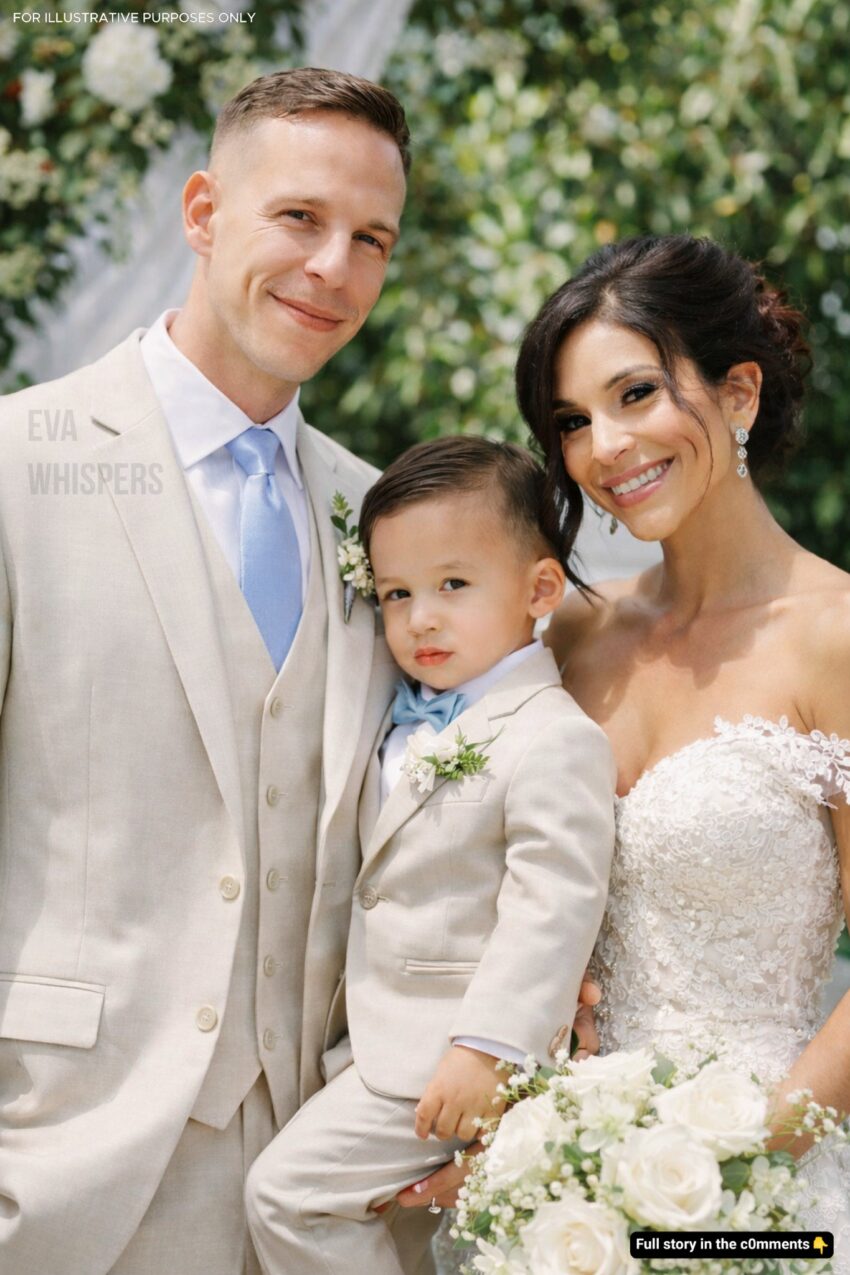
Anna and I married a few months later. String lights, folding chairs, laughter — the kind that comes from people who don’t pretend.

We moved into a small rental with sticky drawers and a lemon tree in the backyard. Aaron painted his room green, leaving handprints on the wall.
Three months in, at the grocery store, Aaron looked up at me. “Can we get the marshmallow kind, Dad?”
He didn’t realize what he’d said. But I did. That night, I cried into clean laundry. Grief and joy lived in the same room.
Life was quiet. Anna worked nights. I handled school pickups, lunches, dinners. Saturdays were cartoons, living room dances in socks, mismatched mugs from yard sales.
My mother never called. Until last week.
“So this is really the life you chose, Jonathan.”
“It is, Mom.”
“I’m back in town. I’ll stop by tomorrow. Send me the address. I’d like to see what you gave everything up for.”
Anna didn’t flinch. “You’re thinking of deep-cleaning the kitchen, aren’t you?”
“I don’t want her twisting what she sees.”
“She’ll twist it anyway. This is who we are.”
I cleaned, but didn’t stage. The magnet-covered fridge stayed. The messy shoe rack stayed.
She arrived the next day, perfectly on time, camel coat, heels clicking against our crooked walkway. Perfume hit me before she did. She walked in without hello, looked around, and grabbed the doorframe like she needed balance.
“Oh my God! What is this?”
Her eyes swept across the secondhand couch, scuffed coffee table, crayon marks along the baseboards. She paused at Aaron’s green handprints outside his room. In the corner sat the upright piano — lacquer worn, pedal squeaking, one key stuck.
Aaron walked in with a juice box, glanced at her, then at the piano. He climbed onto the bench and began to play. Chopin. The same piece she had drilled into me until my hands went numb.
“Where did he learn that?” she asked quietly. “He asked. So I taught him.”
Aaron climbed down, holding a drawing. “I made you something.”
It showed our family on the porch. My mother was in the upstairs window, surrounded by flower boxes.
“I didn’t know what kind of flowers you liked, so I drew all of them.”
She took it carefully. “We don’t yell here,” Aaron added. “Daddy says yelling makes the house forget how to breathe.”
Her jaw tightened. She blinked, but said nothing.

We sat at the kitchen table. Anna had made tea and banana bread. My mother barely touched her cup.
“This could’ve been different. You could have been someone, something. You could have been great, Jonathan.”
“I am someone, Mom. I just stopped performing for you — for the one person who never clapped.”
Her mouth opened, then closed. She looked down at the drawing. Aaron smiled at me. Anna squeezed my knee.
“My father said the same thing when I brought your father home,” she said finally.
“He told me I was throwing everything away. And when he left me… I built a life no one could question. I thought if everything was flawless, no one would leave. I thought control meant safety.”
“You lost us anyway,” I said.
“Because you didn’t give us any choice.”
She didn’t deny it. For the first time, she looked at me without trying to fix something.
Anna spoke softly. “Jonathan chose us. But we’re not a punishment. And you don’t have to be the villain, Margot. Not unless you keep acting like one.”
My mother didn’t answer. She left half an hour later. No hug, no apology.
That night, my phone rang. Her voice was uneven. “I didn’t know it would feel like that. Your home… the way your son smiled at you… The way your wife looked at you — like she trusts you with everything.”
Her voice caught. “I don’t think anyone’s ever looked at me that way.”
Then came sobs, sharp and sudden. She gasped for air, trying to muffle it. “Mom,” I said gently. “Do you want me to come over?”
Silence. Then a broken sound. “No. I just needed you to know I saw it. That’s all.”
She hung up.
The next morning, I found an envelope under the doormat. Inside was a music store gift card and a note in her precise handwriting: “For Aaron. Let him play because he wants to.”
I stood in the doorway, the note in my palm, light washing across the floor. For the first time in years, I didn’t feel broken. It wasn’t closure. Not yet.
But maybe it was something better. Maybe it was the beginning of something new.