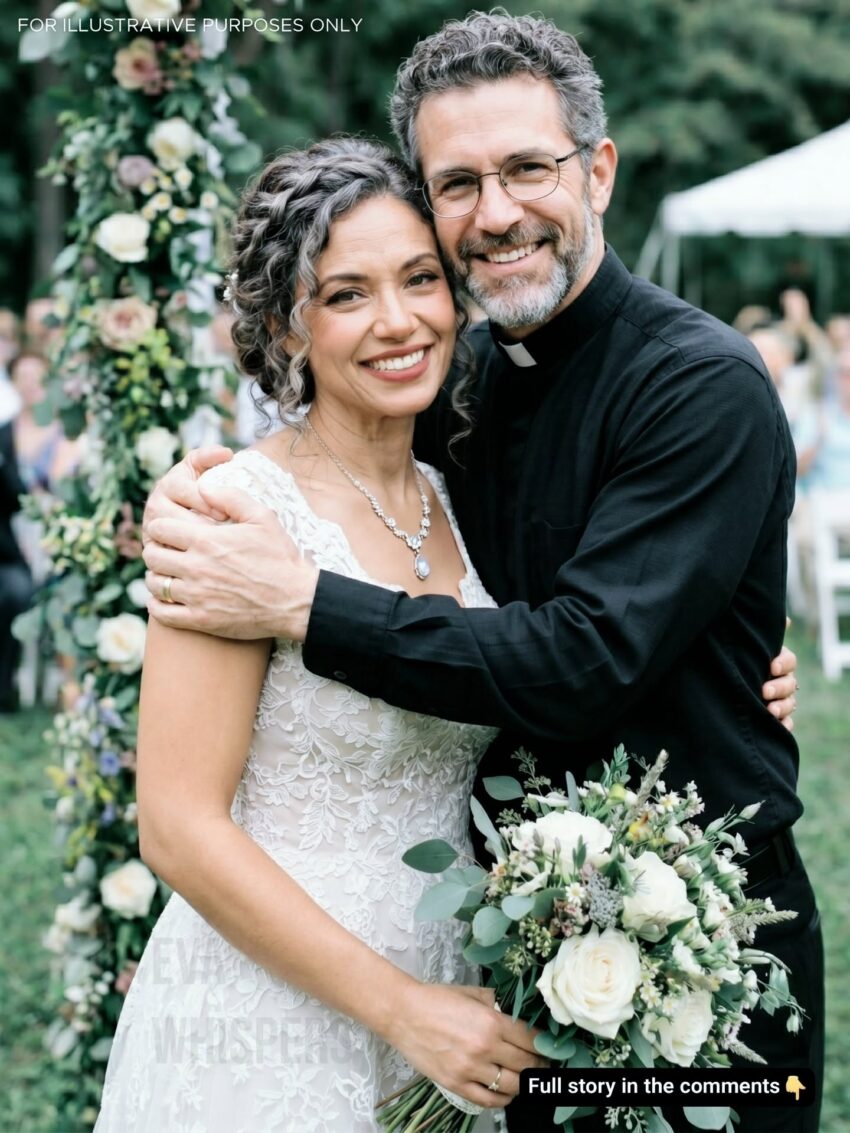
I married Nathan Whitmore on a quiet Saturday afternoon, under a white wooden arch covered in soft roses and ivy.
At sixty years old, I stood in front of a small church filled with people who had seen both of us survive more than one season of sorrow. There were no extravagant decorations, no crowded reception hall, no endless speeches. Just warm faces, gentle music, and Nathan’s hand trembling slightly as he slipped the ring onto my finger.
For a moment, I forgot every lonely year that had led me there.
I had been married once before, back when I still believed love could survive on effort alone.
But that marriage had not ended with shouting or scandal. It ended slowly, quietly, after years of two people drifting apart until silence became easier than conversation. When I left at forty-two, I carried one painful lesson with me: sometimes love is not enough to make two people stay.
After that, I built a life around peace.
I had my little routines. My books. My garden. My Sunday church pew near the back. I was not unhappy, exactly. But I had stopped expecting anyone to choose me for good.
Then Nathan appeared.
He was the pastor of a small church outside town, a gentle man with silver hair, kind eyes, and a voice that made people feel safe. He had been widowed twice, and though he rarely spoke of his past, sorrow seemed to sit beside him like an old, familiar companion.
We began with coffee after church.
Then walks.
Then long conversations on park benches where neither of us felt the need to pretend.
He listened to me in a way I had almost forgotten was possible. He remembered small things. He never rushed my heart. And slowly, without realizing it, I began to let him in.
When he proposed, there was no dramatic speech.
We were sitting on his porch as evening light spilled across the yard.
“I don’t want to spend what’s left of my life alone,” he said softly. “And I don’t think you do either, Mattie.”
My eyes filled with tears.
“I don’t, Nat,” I whispered.
And just like that, I said yes.
Our wedding day felt like grace.
But that night, everything changed.
After the reception, we returned to Nathan’s house—our house now. It was my first time seeing it as more than a guest. I walked slowly through the rooms, touching the back of a chair, the edge of a bookshelf, the framed photographs on the wall.
“This is where everything begins again,” I thought.
“I’m going to freshen up,” I told him.
Nathan smiled. “Take your time, darling.”
But when I returned to the bedroom, he was standing in the center of the room, still wearing his suit.
His face was pale.
“Nathan?” I asked. “Are you alright?”
He didn’t answer at first.
Then he walked to the nightstand, opened the top drawer, and took out a small key.
My stomach tightened.
He unlocked the bottom drawer and slowly pulled out a worn wooden box, a bundle of letters tied with blue ribbon, and two faded photographs.
Then he looked at me with eyes full of shame.
“Before we go any further,” he said, his voice breaking, “you need to know the whole truth, Matilda. I’m ready to confess what I’ve done.”
The room seemed to tilt.
My mind raced through every terrible possibility.
“What have you done?” I whispered.
Nathan sat on the edge of the bed and opened the wooden box. Inside were two wedding rings, a silver cross necklace, and dozens of handwritten notes.
“These belonged to Clara and Ruth,” he said.
His two late wives.
I sat down slowly.
Nathan covered his face with one hand. “Everyone believes I was a devoted husband to both of them. And in some ways, I was. I cared for them. I provided. I stood beside them in sickness. But the truth is… I failed them before that.”
His voice cracked.
“With Clara, I was young and ambitious. The church always came first. Meetings, visits, sermons, committees. I told myself I was serving God, but sometimes I was hiding from home. Clara was lonely, and I didn’t see it until it was too late.”
He picked up one of the letters.
“She wrote this a month before she passed. She never gave it to me. I found it after the funeral.”
He handed it to me.
The handwriting was delicate.
Nathan, I do not doubt that you love people. I only wish you had learned how to come home before I stopped waiting.
Tears blurred my vision.
Nathan stared at the floor.
“With Ruth, I promised myself I would do better. But grief had made me afraid. I kept parts of myself locked away. I was kind, yes. Faithful, yes. But I never fully let her into the places where I was broken. She used to tell me, ‘Nathan, I can live beside your pain, but not outside of your heart.’”
He swallowed hard.
“When she became ill, she asked me to open this drawer one day. I refused. I told her the past should stay buried. She smiled sadly and said, ‘Then one day, you’ll bury love while it’s still breathing.’”
He looked at me then, and tears ran freely down his face.
“Mattie, I did not harm them. I did not betray them with another woman. But I failed them with my silence. I let ministry, grief, pride, and fear stand between me and the women who loved me. And tonight, I realized I was about to do the same thing to you.”
My fear softened into something deeper.
Pain.
Understanding.

I looked at the locked drawer, the letters, the photographs.
“So this is why you never let me come here before the wedding?” I asked.
He nodded. “Because this room held the truth. And I was ashamed.”
I took a breath. “Nathan… why tell me now?”
“Because I love you,” he said. “And I don’t want our marriage to begin with locked drawers. I don’t want you to become another woman who has to guess where my heart is.”
For a long moment, I said nothing.
Part of me wanted to be angry. Another part of me wanted to run, because old wounds know how to recognize danger even when it is dressed as honesty.