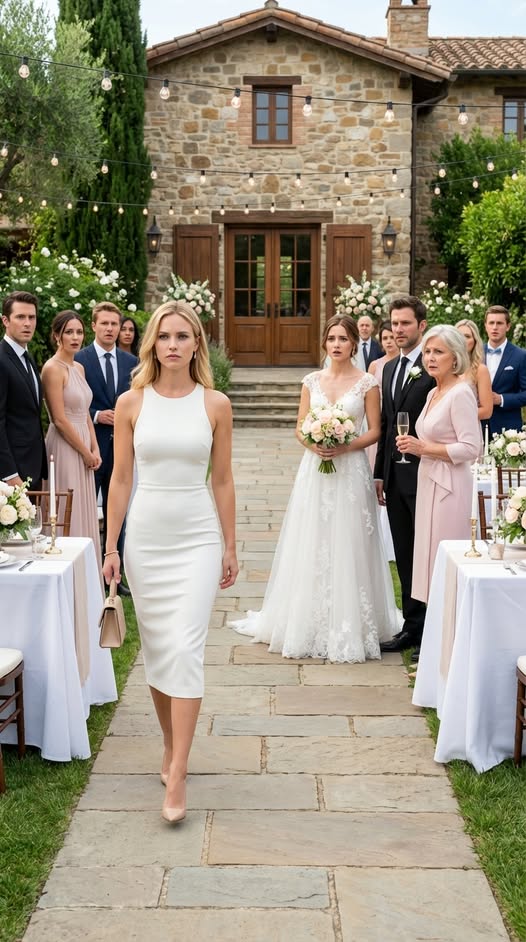
The day my parents told me they wouldn’t pay for my college, they called it a lesson.
Self-reliance. Character. Strength.
My father delivered it like a speech he had rehearsed, sitting at the head of the table as if he were doing me a favor instead of closing a door. My mother didn’t interrupt. She didn’t soften it. She just watched, calm and distant, like the outcome had never really concerned her.
I had been accepted to the University of Pennsylvania with a small scholarship that barely touched tuition, let alone rent, books, or food.
They knew that.
They just didn’t care.
My younger sister, Chloe, stood halfway in the hallway, watching everything unfold. She didn’t say a word. Maybe she didn’t understand yet. Maybe she already did.
What none of us said out loud—but all of us knew—was that when it came time for Chloe, there would be no speeches. No lectures about grit.
She would get everything.
And she did.
They gave me one week to leave.
That was their version of kindness.
I packed a suitcase, took the five hundred dollars I had saved from part-time jobs, and walked out of that house with something sharp and steady sitting in my chest. Not just anger—something colder than that.
A promise.
I wouldn’t come back.
Not for help. Not for approval. Not even for closure.
The years that followed weren’t dramatic in the way people like to imagine hardship. There were no sudden breakthroughs, no miraculous rescues. Just long stretches of exhaustion stitched together by necessity.
I worked wherever I could—waitressing double shifts, shelving books in a store that smelled like dust and paper, sitting overnight in a warehouse office just to keep the lights on.
I learned how to survive before I learned how to live.
Eventually, I made it to law school. Not easily. Not gracefully. But I got there.
I skipped holidays. Ignored birthdays. Let every call from home ring until it stopped.
For a while, it felt like I had disappeared from their lives completely.
And then, nine years later, an invitation arrived.
A wedding.
Chloe’s.
The venue was an estate in Charleston, the kind of place designed to look timeless and untouched, as if money could erase history instead of simply covering it.
The invitation wasn’t signed by my parents.
It was from Chloe.
Inside, there was a note. Small. Careful. Almost apologetic.
Please come.
I wasn’t sure why I went.
Maybe curiosity. Maybe unfinished business. Maybe something in me still wanted to see what had become of the life I’d been pushed out of.
The estate was exactly what you’d expect—perfect lawns, white arches, people dressed like they belonged in a photograph instead of a moment.
And then my mother saw me.
She didn’t hesitate.
“What is this spare part doing here?” she said, loud enough that nearby conversations stopped mid-sentence.
The words landed exactly as she intended.
Public. Sharp. Final.
I hadn’t even opened my mouth yet.
For a second, the air seemed to fold in on itself.
Then someone moved.
The groom—Austin Miller—stepped down from the altar.
And the look on his face wasn’t confusion.
It was recognition.
“Shut your mouth right now, Lydia,” he said.
The silence that followed felt heavy, almost physical.
No one spoke to my mother like that. Not in public. Not ever.
The string quartet stopped. Somewhere, a glass shattered against the stone.
Chloe stood frozen, her bouquet clutched so tightly her knuckles had gone pale.
I looked at Austin more closely then.
And something shifted.
There was something familiar about him—not just his face, but the way he held himself. The tension in his jaw. The small scar near his temple.
And then it hit me.
Years earlier, during a pro bono internship in Houston, I had worked on a case involving a woman named Maria Sanchez. She had been accused of theft by a wealthy family after she tried to report something they didn’t want exposed.
Her son had been there most days. Quiet. Scared. Sitting in the corner while I brought him water and paper just to keep his hands busy.
That boy had grown up.
And he was standing in front of me.
“You were the one,” Austin said, his voice unsteady.
“I was there,” I replied.
My mother tried to interrupt, to reclaim control of the moment, to push everything back into the version she preferred.
But it was already slipping.
“There’s no wedding today,” Austin said.
Just like that.
Three hundred people shifted in place, unsure whether they were witnessing a mistake or the truth breaking through it.
My father finally stepped forward, anger written all over him.
“What is going on?” he demanded.
Austin didn’t raise his voice.
He didn’t need to.
“Your wife just insulted the only person who helped my family when we were being destroyed by people exactly like you.”
The whispers started immediately.
Chloe dropped her bouquet.
For the first time, she wasn’t playing a role.
She looked at me, her eyes filled with something I hadn’t seen before.
Guilt.
“I was going to tell you,” she said quietly. “I just didn’t know how.”
Then everything came out.
About our grandfather. About the blue folder. About the truth that had been buried for years.
The trust fund.
The one meant for both of us.
The one that had been there all along.
“You were supposed to have your education paid for,” Chloe said. “He made sure of it.”
Austin stepped closer, handing me an envelope.
“Your parents closed the account,” he said. “They took your portion before you even left.”
For a moment, everything went quiet inside me.
Nine years.
Nine years of struggle, of exhaustion, of believing I had been left to figure it out alone.
And it had all been a lie.
My mother laughed.
A short, sharp sound meant to cut through everything else.
“Are we here for a wedding,” she said, “or a cheap performance?”
Chloe turned on her then.
Not softly. Not carefully.
“I’m done,” she said. “I’m done pretending this is normal. I’m done pretending she doesn’t exist.”
My father tried to step in again, but this time Chloe didn’t back down.
“You don’t get to decide when the truth is inconvenient,” she said.
The room had shifted completely now.
The story my parents had controlled for years was unraveling in real time.
And for once, they couldn’t stop it.
We left.
Not dramatically. Not loudly.
Just… left.
Chloe, Austin, and I drove into the city and found a courthouse. No flowers. No audience. Just a quiet room, a few witnesses, and a ceremony that felt real in a way the estate never had.
Two months later, I filed the lawsuit.
It was long. Exhausting. Ugly in the way truth often is when it finally surfaces.
But I won.
Not just the money—the full amount, plus interest.
I won the truth of my own life back.
The money didn’t fix everything.
It didn’t erase the years or soften what had been done.
But it gave something back that mattered more than comfort.
It gave clarity.
Chloe and I are still rebuilding. Slowly. Carefully. Without pretending the past didn’t happen.
As for my parents—I haven’t spoken to them since that day.
They wanted to teach me independence.
In a way, they succeeded.
Just not in the way they imagined.
I left their house with a suitcase and a future they thought they had taken from me.
I came back with the truth.
And this time, I wasn’t something they could discard.
I was someone they could no longer define.When my parents refused to pay for my college, they said it was to teach me independence. Funny how they never gave that lesson to my sister. They paid for absolutely everything for her.
I left home with a suitcase, a silent rage, and a promise never to need them again.
Nine years later, I showed up at my sister’s wedding. My mother greeted me like I was something out of place: “What is this leftover piece doing here?”
My sister’s fiancé went pale when he saw me… and immediately ordered her to be quiet.
When my parents decided not to pay for my university, they wrapped it in an elegant speech about character, maturity, and independence. My father, Harrison, placed both hands on the dining table and spoke as if he were signing a noble sentence. My mother, Lydia, nodded with that cruel calm of someone who wouldn’t have to deal with the consequences.
I was eighteen. I had an acceptance letter to University of Pennsylvania. A partial scholarship that didn’t come close to covering rent, books, and full tuition. My younger sister, Chloe, two years younger, watched silently from the hallway.
No one said that when her turn came, they would not only pay for a private university in Boston, but also her car, her apartment, and even her summer trips.
They gave me a week to “get organized.” That was the word. As if poverty could be solved with a planner and a good attitude.
I left home with a single blue suitcase. Five hundred in savings. A rage so solid it became my backbone. A promise lodged in my throat: I would never need them again.
I worked as a waitress in Philadelphia, a clerk in a secondhand bookstore, a night receptionist at a hostel near the historic center. I slept little. Ate worse. I finished my law degree in pieces, dragging dark circles and pride behind me.
I didn’t go back for Christmas. I didn’t call on birthdays. When my grandfather d/ie/d, I went to the funeral, stayed in the back, and left before my mother could kiss the air with her hypocrisy.
Nine years later, I returned to Charleston for Chloe’s wedding.
The invitation didn’t come from my parents, but from her. A simple card sent to my office, with a brief note:
“Please come. I need you there.”
It didn’t say why. I hesitated for three days before accepting. Deep down, I suspected a staged reconciliation, one of those performances for family photos. Still, I went.
The ceremony was at a restored hacienda on the outskirts. Trimmed gardens. Stone arches. Waiters gliding like trained shadows.
As soon as I crossed the entrance, my mother saw me. Her expression wasn’t surprise. It was pure irritation. As if someone had left a bag of trash in the middle of the main hall.
—What is this leftover piece doing here? —she said, loud enough for several heads to turn.
The air tightened. I hadn’t yet decided whether to respond with dignity or venom.
My sister’s fiancé, Austin Miller, turned toward me from the improvised altar. First he frowned. Then he went pale instantly. As if something from the past he feared had just stepped into the room.
In front of everyone, he looked at my mother and ordered, in a dry voice on the edge of collapse:
—Be quiet. Right now.
For a second, no one breathed.
The mariachi musicians stopped mid-song. A glass fell somewhere in the back and shattered with an indecent sound in the silence. My mother froze, not out of shame, but disbelief. In her world, no one spoke to her like that. And certainly not the perfect groom on his wedding day.
Chloe, in her ivory dress fitted at the waist, bouquet trembling in her hands, looked first at Austin, then at me. There was no surprise in her face. There was fear. Old, prepared fear.
I knew that expression. I had seen it in the mirror for years.
—Austin… —she murmured.
But he was already stepping down from the altar, not taking his eyes off me. His face was undone. His breathing uneven. I tried to place him. I knew I had seen him before. There was something in the way he clenched his jaw, in the faint scar near his left temple, in the tense way he held his shoulders, like someone always expecting a blow.
And then it clicked.
Houston. Eight years ago. A trial.
Back then, I was an intern at a small law firm handling public defense criminal cases. We had defended a woman, Maria Sanchez, falsely accused of embezzlement by a wealthy family she had worked for as a domestic employee.
In reality, that woman had tried to report the family’s eldest son for as/sault. The complaint never moved forward. Instead, she ended up in front of a judge, humiliated, without resources, with a nine-year-old boy clinging to her side.
The boy had testified in a special room. I had brought him water, cookies, and a notebook because he wouldn’t stop shaking. His name was Austin Miller.
The same man now standing in front of me, dressed as a groom, pupils dilated, his life about to explode in his hands.
—You were there —he said quietly, as if the words scraped his throat.
It wasn’t a question. See less